Monday, 5 January 2026

New paper: Identifying direct risk factors for COVID-19 hospitalization in UK Biobank using Doublethink

This week sees publication of our new paper Identifying direct risk factors in UK Biobank via simultaneous Bayesian-frequentist model-averaged hypothesis testing using Doublethink in Proceedings of the National Academy of Sciences (PNAS). This work was joint with Nicolas Arning and Helen Fryer.

In this study we applied a novel approach called Doublehthink to implement an exposome-wide association study (ExWAS) of non-genetic risk factors that influence risk of COVID-19 hospitalization in UK Biobank (UKB). Inspired by Bayesian model averaging, our approach enhances power by testing both individual variables and arbitrary groups of variables.

We employed Doublethink to reveal exposome-wide significant signals across nine individual variables and seven groups of variables, notably factors like aging, dementia and prior infection overlooked by 85% of previous studies of the UK Biobank. We found significant direct effects among some commonly reported risk factors like age, sex, and obesity, but not others like cardiovascular disease. The effects of hypertension, depression, and diabetes appeared to be mediated via general comorbidity. 

Graph of variables with direct effects on COVID-19 hospitalization risk in UK Biobank, quantified by log sub 10 posterior odds and adjusted P-value.

Biobank-scale epidemiology has transformed the study of common diseases, particularly through the discovery of genetic risk factors using genome-wide association studies (GWAS) methods. ExWAS applies similiar logic to pursue agnostic, data-driven discovery of non-genetic risk factors.

Doublethink offers an ExWAS method that can test thousands of variables in hundreds of thousands of UK Biobank participants. It controls both Bayesian (false discovery rate; FDR) and classical (familywise error rate; FWER) measures of false positives. Its Bayesian model-averaging approach enables an agnostic approach to variable selection, but it also addresses drawbacks of Bayesian methods like computational burden and reliance on prior assumptions for its false positive control.

Through its capacity to interpret biobank-scale data, our new Doublethink-based ExWAS approach paves the way for future systematic analyses of risk factors for infectious and chronic diseases in UK Biobank and beyond.

Tuesday, 14 October 2025

New paper: Machine learning and statistical inference in microbial population genomics

We have published a new review article in Genome Biology contrasting machine learning and statistics in microbial genomics. This is joint work with Sam Sheppard, Nick Arning and David Eyre.

The availability of large genome datasets has changed the microbiology research landscape. Analyzing such data requires computationally demanding analyses, and new approaches have come from different data analysis philosophies. Machine learning and statistical inference have overlapping knowledge discovery aims and approaches.

In this review, we highlight how machine learning focuses on optimizing prediction, whereas statistical inference focuses on understanding the processes relating variables. We outline the different aims, assumptions, and resulting methodologies, with examples from microbial genomics. These approaches are essentially complementary, and we argue that exploiting both machine learning and statistics - selecting the right tool for the job - has the greatest potential for advancing pathogen research in the big data era.

Monday, 12 May 2025

Doublethink: simultaneous Bayesian-frequentist model-averaged hypothesis testing

Helen Fryer, Nick Arning and I have posted our new preprint to arxiv. This is the first version of the paper that we have submitted for peer review. Doublethink addresses some long-standing questions in assessing evidence for the purposes of hypothesis testing.

Hypothesis testing is central to scientific enquiry, but conclusions can be heavily influenced by model specification, particularly which variables are included. Bayesian model-averaged hypothesis testing offers a solution, but the sensitivity of posterior odds and Bayesian false discovery rate (FDR) guarantees to prior assumptions limit the appeal. In hypothesis testing, we lack unifying results – like Bernstein-von-Mises’ Theorem – that predict convergence of Bayesian and frequentist results, even in large samples.

Our paper introduces new theory and a practical method, Doublethink, motivated by these issues:
  • A key, and perhaps surprising, result is that Bayesian model-averaged hypothesis testing natively controls not only the Bayesian FDR, but also the frequentist strong-sense familywise error rate (FWER). This duality – which is general – seems to be unknown, or forgotten.
  • For practical application, we derive large-sample asymptotic theory to quantify the rate at which the FWER is controlled. Specifically, we use a BIC-like model to characterize the tail probability of the model-averaged posterior odds via a chi-squared distribution.
  • This result enables simultaneous control of Bayesian FDR and frequentist FWER at quantifiable levels and – equivalently – simultaneous reporting of posterior odds and asymptotic p-values.
  • We explore the method’s benefits – like post-hoc variable selection – and limitations – like inflation – through a Mendelian Randomization study and detailed simulations, comparing Doublethink to Lasso, stepwise regression, the Benjamini-Hochberg procedure and e-values.
Besides the practical benefits of model-averaged hypothesis testing with frequentist guarantees, and the implications that entails for objective Bayesian hypothesis testing, these results offer fundamental insights likely to trigger renewed discussion of FDR, FWER and the reconcilability of p-values with evidence.

Doublethink is a novel addition to the emerging class of heavy-tailed combination tests. Since 2019, methods like the Cauchy combination test and harmonic mean p-value have surfaced as powerful tools for combining hypothesis tests despite inter-test dependence. Doublethink improves on these methods by allowing model uncertainty in the null hypothesis and by improving power.

We believe this paper will be of broad interest, addressing questions of importance to statistical methodology, big data analysis and scientific enquiry more generally.

Explanation of variables above

  • The model-averaged p-value, adjusted for multiple testing, is p*.
  • The model-averaged posterior odds, calculated from a Bayesian analysis, is PO.
  • The number of variables in the analysis is ν.
  • The prior odds of including each variable are μ.
  • The sample size n is represented by ξn, which decreases as √n increases.

Wednesday, 2 April 2025

Machine Learning versus Statistical Inference in Microbial Genomics

My talk given today at the 2025 Microbiology Society Conference in Liverpool:

Abstract

The advent of vast genomic datasets has transformed microbiology, presenting opportunities and challenges for data analysis. The distinct philosophies of machine learning (ML) and statistical inference gives them complementarity strengths and weaknesses in tackling big data problems in pathogen research. While statistical inference prioritizes understanding underlying relationships, ML focuses on optimizing predictive performance. In this talk I will contrast the approaches and offer a view on their relative utility for three problems: source attribution, bacterial genome-wide association studies, and predicting antimicrobial resistance phenotypes from whole genome sequences.

Friday, 15 November 2024

What Google AI thinks about the harmonic mean p-value method.

Thanks to Jeff Chen who asked Google NotebookLM to produce this radio-style audio description of the harmonic mean p-value paper: hmp-google-notebooklm.m4a

Monday, 29 July 2024

Doublethink methods paper

Today we release the first full draft of the Doublethink methods paper. This is an evolution of what was originally conceived as the supplement to the Doublethink COVID-19 paper. The wider significance of the results persuaded us to separate the two, which now focus on:

  • Doublethink methods paper: Broad connections between Bayesian and classical hypothesis testing that we hope bring the best of both world by enabling scientists to simultaneously control the Bayesian false discovery rate and the classical familywise error rate, in big data settings.
  • Doublethink COVID-19 paper: Identifying direct risk factors for COVID-19 hospitalization among 2000 candidate variables in 200,000 UK Biobank participants. Compares results to the literature and considers the limitations imposed by mediation and complex 'exposome-wide' association studies.
After soliciting colleagues for comments and another round of editing, we will move toward submission in later this year.

Tuesday, 23 January 2024

Festival of Genomics 2024

I will be talking at the Festival of Genomics on Wednesday 24 January about Identifying virulence and antimicrobial resistance genes in bacterial using genome-wide association studies. You can preview my talk here.

Wednesday, 3 January 2024

Introducing Doublethink: joint Bayesian-frequentist model-averaged hypothesis testing

This week Nick Arning, Helen Fryer and I released two related preprints describing a new method called Doublethink, and its application to identifying risk factors for COVID-19 hospitalization in UK Biobank:

Doublethink: Bayesian-frequentist model-averaged hypothesis testing

Doublethink enables joint Bayesian and frequentist hypothesis testing when there is model uncertainty by interconverting Bayesian posterior odds and classical (frequentist) p-values. It has broad implications because (i) it reveals connections between the Bayesian approach to model averaging and the classical approach to multiple testing, and (ii) it brings the benefits of Bayesian model averaging to classical statistics.
Doublethink addresses two fundamental problems in hypothesis testing:
  1. In classical tests, the statistical evidence that one variable directly affects an outcome generally depends on which other variables are assumed to directly affect it.
  2. In Bayesian tests, the statistical evidence that one variable directly affects an outcome depends on the prior assumptions.
These issues are addressed by computing p-values from Bayesian model-averaged posterior odds, which (1) account for model uncertainty and (2) are theoretically invariant to prior assumptions, assuming large sample sizes.
Doublethink simultaneously controls the frequentist family-wise error rate (FWER) and the Bayesian false discovery rate (FDR). It builds on Johnson's Bayesian tests based on likelihood ratio statistics, and Karamata's theory of regular variation.

Identifying direct risk factors in UK Biobank with Doublethink

We applied Doublethink to identify direct risk factors for COVID-19 hospitalization in UK Biobank. This is a well-studied problem but we took an 'exposome-wide' approach in which we evaluated whether 1,900 variables measured in the UK Biobank each affected the outcome. This is still an under-utilized approach in epidemiology, which usually focuses on candidate risk factors.
Exposome-wide approaches have potential benefits over candidate risk factor approaches, including:
  • The ability to discover unexpected results.
  • Stringent control for multiple testing.
  • Avoidance of bias in choosing candidate risk factors or deciding to publish.
However, we only studied the direct effects of variables on the outcome. This means we cannot make statements about the total (direct and indirect) effects of a variable, e.g. smoking, on the outcome, which are needed in applications like assessing potential interventions.
We identified individual variables and groups of variables that were 'exposome-wide significant' at 9% FDR and 0.05% FWER, after accounting for the direct effects of all other variables.

Comparing our results to over 100 published studies of COVID-19 in UK Biobank, we
  • Recapitulated several commonly reported direct risk factors, e.g. age, sex, and obesity.
  • Excluded others, e.g. diabetes, cardiovascular disease, and hypertension, which might be mediated through other variables that measure general comorbidity.
  • Identified some infrequently reported direct risk factors, both individually, e.g. lung infection, and as groups, e.g. constipation/urinary tract infection, which might reflect underlying kidney disease.
The ability to test groups of variables, which increases sensitivity, was one of the benefits of Doublethink's model-averaging approach. It is particularly helpful in large biobanks that measure thousands of variables, because correlation between variables is pervasive, and can dilute the significance of individual variables that measure similar phenomena, like the numerous types of deprivation index. It serves as a flexible alternative to pre-analysis variable filtering algorithms, while controlling the risk of false positives by pre-defining significance thresholds for all possible tests.
To read more, please check out the preprints here and here.

Wednesday, 28 September 2022

Rewley House Lecture: Role of data science in the pandemic

This year I was invited to give the Rewley House Lecture, a multidisciplinary research talk open to all, at the Department for Continuing Education, where I am Director of Studies in Data Science.

I talked about how data science has been used during the COVID-19 pandemic, spanning vaccine design, clinical trials, surveillance and policy advice, and highlighting the identification of risk factors for disease.

If you like this talk, you might be interested in the following courses available this academic year:


Thursday, 25 August 2022

Identifying resistance genes in tuberculosis

Newly published in PLOS Biology is our work identifying genes that confer resistance to common and last-resort antibiotics in bacteria that cause tuberculosis. Resistance to these drugs contributes to mortality and sickness on a pandemic scale every year, and disproportionately affects the poorest people in the world.

This new article is one of a series presenting results generated by more than 100 scientists across 23 countries across 5+ years as part of a collaboration called CRyPTIC.

Our role in CRyPTIC was the discovery of genes and mutations likely to cause drug resistance by applying a tool known as a genome-wide association study (GWAS), an approach we helped adapt to bacteria.

Using GWAS, we identified previously uncatalogued genes and mutations underlying resistance to every one of the 13 drugs we investigated. These include new and repurposed drugs, as well as the first- and second-line drugs more often used to treat tuberculosis.

Thanks to its generous funders, CRyPTIC dedicated scale (10,000+ genomes) and technical innovation (new high-throughput MIC assays) to help decode the DNA blueprint of antibiotic resistance. Pushing these boundaries has yielded a steep increase of up to 36% in the variation in resistance attributable to the genome for the important and previously understudied new and repurposed drugs.

Science at this scale can produce a seemingly overwhelming wealth of new information. We avoided the temptation to over-emphasize any individual result for the sake of simple narrative. Instead, we highlighted discoveries of uncatalogued genes or genetic variants that we found for every drug investigated:

The amidase AmiA2 and GTPase Era for bedaquiline.

The cytochrome P450 enzyme Cyp142 for clofazimine.

The serine/threonine protein kinase PknH for delaminid.

The antitoxin VapB20 for linezolid.

The PPE-motif family outer membrane protein PPE42 for amikacin and kanamycin.

The antibiotic-induced transcriptional regulator WhiB7 for ethionamide.

The rRNA methylase TlyA for levofloxacin.

The DNA gyrase subunit B GyrB for moxifloxacin.

The putative rhodaneses CysA2 and CysA3 for rifabutin.

The tRNA/rRNA methylase SpoU for ethambutol and rifampicin.

The multidrug efflux transport system repressor Rv1219 for isoniazid.

All these hits passed stringent evidence thresholds that take into account the large amount of data crunched. For each hit, we identified possible relationships between gene functions, such as they are known, and the mechanism of action of the antibiotics.

Beyond the biological discoveries of primary interest, this new paper unveils methodological advances in bacterial GWAS. We introduced a systematic, whole-genome approach to analysing not just short DNA sequences (so called oligonucleotide or “kmer”-based approaches), but also short sequences of the proteins that the DNA codes for (an oligopeptide-based approach). We have released our software on an open-source GitHub repository.

We also discovered a relationship that may help disentangle a technical issue in bacterial GWAS where the co-occurence of traits can trick us into thinking that a gene influences one trait when it influences another instead. For antimicrobial resistance, this issue is known as artefactual cross resistance. We observed that true associations tended to produce larger associations (as measured by the 'coefficient', rather than the p-value), providing a possible way to prioritize signals in the future.

This paper was published alongside the CRyPTIC Data Compendium in PLOS Biology, in which we released our data open source to the community, with resources provided by the European Bioinformatics Institute.

Some of the results of CRyPTIC have already been rushed into service by the World Health Organization on the grounds of exceptional importance based on a candidate gene approach; this includes the DNA gyrase subunit B – moxifloxacin association spotlighted above (Walker et al 2022). However, the new results go beyond a candidate gene approach, detecting a range of previously uncatalogued genes via its agnostic, whole-genome strategy.

Unpicking the genetics of antimicrobial resistance is a priority for improving rapid susceptibility tests for individual patients, selecting drug regimens that inhibit the evolution of multidrug resistance, and developing improved treatment options. The need is particularly great in M. tuberculosis, which killed 1.4 million people in 2019, owing to the slow (6-12 week) turnaround of traditional susceptibility testing, and the alarming threat of multidrug resistant tuberculosis. The discovery of many new candidate resistance variants therefore represents an advance that we hope will contribute to progress in reducing the burden of disease.

Wednesday, 23 February 2022

Seeking Postdoc in Statistical Genetics and Infectious Disease

I am seeking a senior postdoc in Statistical Genetics and Infectious Disease to join my research group at the Big Data Institute, University of Oxford. Our research into Infectious Disease Genomics is focused on developing and applying big data methods to identify genetic risk factors for disease, both microbial virulence factors and human susceptibility genes. We are focused on a range of bacterial and viral diseases including staphylococcal sepsis and COVID-19.

The Big Data Institute, part of Oxford Population Health, provides an excellent environment for multi-disciplinary research and teaching. Situated on the modern Old Road Campus in the heart of the medical sciences neighbourhood of Headington, we benefit from outstanding facilities and opportunities to collaborate with world-leading scientists and clinicians to help expand knowledge and improve global health.

As a Senior Postdoc the post-holder will work closely with me to jointly lead the implementation, design and application of new statistical tools for genome-wide association studies, and to lead the biological interpretation of key findings. They will develop novel methodologies for analysis and data collection, take the lead in the production of scientific reports and publications and supervise junior group members.

To be considered applicants will have a PhD and post-doctoral experience in a relevant subject, with direct experience in statistical genetics, demonstrable expertise and knowledge of the statistical genetics literature or a closely related, relevant discipline and a publication record as first author, in statistical genetics.

The position is full time (part time considered) and fixed-term for 3 years.

The closing date for application is 12.00 noon GMT on 18th March.

Click here for more information including how to apply.

Announcing the Oxford Statistical Genomics Summer School 2022

Join us at St Hilda's College Oxford, overlooking the River Cherwell and Christ Church Meadow, for an immersive week-long residential post-graduate summer school on Statistical Genomics on 19th-24th June 2022. This course aims to connect post-graduate and post-doctoral researchers from academia and industry with experts at Oxford's Big Data Institute, Wellcome Centre for Human Genetics, and Department of Statistics.

Our friendly tutors, internationally recognised for their scientific expertise, will offer specialist instruction and hands-on computer practicals across five broad areas of Statistical Genomics: Next-generation Sequence Data Analysis, Gene and Variant Association Testing, Genomics of Infectious Diseases, Genealogical Inference and Analysis, and Medical Genomics.

The course is aimed at trainee scientists actively engaged in statistical genomics research, who wish to expand their knowledge of concepts and techniques.

Click here for more information including how to apply.


Wednesday, 26 January 2022

Postdoctoral and Ph.D. positions in the group

If you are interested in joining the group, please contact me (details here) with a brief explanation and a copy of an up-to-date CV.

Tuesday, 25 January 2022

Announcing ProbGen22 in Oxford 28-30 March

The organizing committee is pleased to announce the 7th Probabilistic Modeling in Genomics Conference (ProbGen22) to be held at the Blavatnik School of Government and Somerville College Oxford from 28th-30th March 2022.

The meeting will be a hybrid in-person and online event. Talk sessions will feature live speakers, both in-person and online, and will take place during the afternoons (making live attendance feasible for US timezones). Talks will be recorded and made available to registrants for a period of one month. Poster sessions will be held online during the evenings.

The conference will cover probabilistic models, algorithms, and statistical methods across a broad range of applications in genetics and genomics. We invite abstract submissions on a range of topics including population genetics, natural selection, Quantitative genetics, Methods for GWAS, Applications to cancer and other diseases, Causal inference in genetic studies, Functional genomics, Assembly and variant identification, Phylogenetics, Single cell 'omics, Deep learning in genomics and Pathogen genomics.

The registration deadline is 28th February 2022.

For more details visit the conference website. 

Tuesday, 7 December 2021

Two new positions: Senior Statistical Geneticist and Bioinformatician

Two new positions are available in my Infectious Disease Genomics group at the Big Data Institute, University of Oxford.

A Senior Postdoctoral Statistical Geneticist to jointly lead the implementation, design and application of new statistical tools for genome-wide association studies, lead the biological interpretation of key findings, develop methodologies and supervise junior group members. This post would suit a candidate with a PhD and relevant post-doctoral experience including direct experience in statistical genetics. Candidates without post-doctoral experience may be considered for a less senior appointment.

A Bioinformatician to provide expertise for computationally intensive analyses including genome-wide association studies and RNAseq studies of differential gene expression, as well as contributing to informatics projects as part of a wider collaboration with national biomedical cohorts. This post would suit a candidate with either a post-graduate degree related to Bioinformatics, Statistics, and Computing or equivalent experience in industry.

The application deadline for both posts is Noon GMT on Friday 7th January 2022.

New paper: Machine learning to predict the source of campylobacteriosis using whole genome data

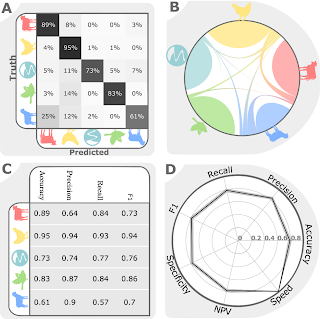
This study, published in October in PLOS Genetics, brings together machine learning, large bacterial isolate collections and whole genome sequencing to address the general problem of how to trace the source of human infections.

Specifically, we investigated campylobacteriosis, a common infection of animal origin causing ~1.5 million cases of gastroenteritis and 10,000 hospitalizations every year in the United States alone. We show that our combined machine learning/genomics analyses:

  • Improve the accuracy with which infections can be traced back to farm reservoirs.
  • Identify evolutionary shifts in bacterial affinity for livestock host species.
  • Detect changes in human infection capability within related strains.

These results will improve understanding not only of Campylobacter, but more generally as these technologies can readily be applied to other important bacterial pathogen species.

This paper builds on previous work published by the group, including our well cited Tracing the source of campylobacteriosis (Wilson et al 2008, PLOS Genetics 4:e1000203). The use of these methods for tracing infection has influenced public health policy and contributed to reducing disease burden.

This work demonstrates the potential for modern genomics and artificial intelligence approaches to address common and serious problems that affect our everyday lives. The awareness of the importance of infection to society has rarely been higher than in 2021, and while the current pandemic imposes an acute global problem, other infections continue to present long-term threats to health and productivity.

This work was led by Nicolas Arning, in collaboration with David Clifton and Sam Sheppard.

New paper: Antimicrobial resistance determinants are associated with Staphylococcus aureus bacteraemia and adaptation to the healthcare environment

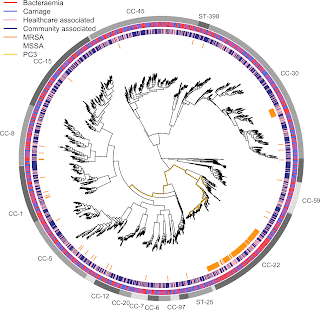
Staphylococcus aureus is a leading cause of infectious disease deaths in all countries, with bloodstream infection leading to sepsis a major concern. This new study, published in November in Microbial Genomics, reports genes and genetic variants in Staph. aureus associated severe disease vs asymptomatic carriage, and healthcare vs community carriage.

Our genome-wide association study of 2000 bacterial genomes showed that antibiotic resistance in Staph. aureus is associated with severe disease and the hospital environment:

  • A mutation conferring trimethoprim resistance (dfrB F99Y) and the presence of a gene conferring methicillin resistance (mecA) were both associated with bloodstream infection vs asymptomatic nose carriage.
  • Separately, we demonstrated that a mutation conferring fluoroquinolone resistance (gyrA L84S) and variation in a gene involved in resistance to multiple antibiotics (prsA) were preferentially associated with healthcare-associated carriage vs community-acquired carriage.

The implication – that antibiotic resistance genes may provide survival advantages which mechanistically contribute to the development of disease – is important in the face of the continued global rise of antibiotic resistance.


We were also able to shed light on a controversy as to whether different strains of Staph. aureus differ in their propensity to cause severe disease. Interest in this question dates back decades in the literature, and contradictory studies, often based on modest sample sizes, have reached different conclusions. Our comparatively large study, using a whole-genome method that we previously published in Nature Microbiology, found that all strains of Staph. aureus are equally likely to cause severe disease vs asymptomatic carriage.


New paper: Genome-wide association studies reveal the role of polymorphisms affecting factor H binding protein expression in host invasion by Neisseria meningitidis

In this paper, published in October in PLOS Pathogens, we discovered a novel genetic association between life-threatening invasive meningococcal disease (IMD) and bacterial genetic variation in factor H binding protein (fHbp) through two bacterial genome-wide association studies (GWAS), which we validated experimentally. This was a collaboration with the groups of Chris Tang and Martin Maiden, with the work in my group led by Sarah Earle.

fHbp is an important component of meningococcal vaccines that directly interacts with human complement factor H (CFH). Intriguingly, our discovery that bacterial genetic variation in fHbp associates with increased virulence mirrors an earlier discovery that human genetic variation in CFH associates with increased susceptibility to IMD (Nature Genetics 42: 772).

Our experiments showed that the fHbp risk allele increased expression. Interestingly, increased susceptibility to IMD has been previously associated with elevated CFH expression. Therefore over-expression of either fHbp by the bacterium or CFH by the host appears to increase the risk of IMD. Since complement evasion is necessary for pathogenesis, these insights offer new leads for improving treatment.

Key results from the paper:

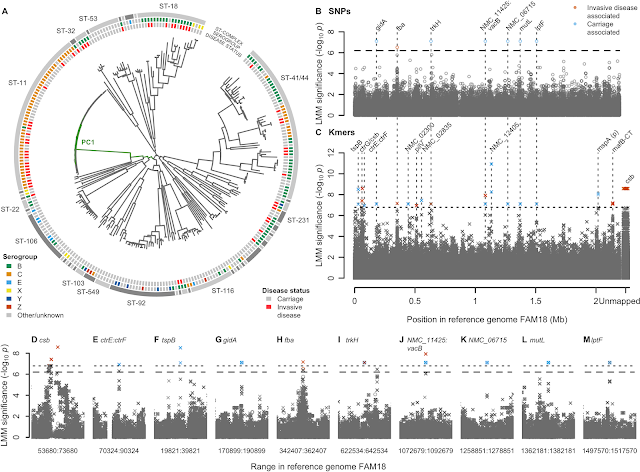
  • A GWAS for IMD in 261 meningococci from the Czech Republic highlighted a highly polygenic architecture of meningococcal virulence (see Figure), including capsule biosynthesis genes, the meningococcal disease association island and the new signal near the fba and fHbp genes.
  • A replication GWAS for IMD in 1295 meningococcal genomes belonging to strain ST41/44 downloaded from pubMLST.org validated the novel signal of association near fba and fHbp.
  • SHAPE reactivity analyses revealed that IMD-associated variation in the regulatory region of fHbp disrupted the ability of the cell machinery to commence gene expression.
  • Flow cytometry assays of newly constructed genetically engineered strains, in different temperatures and in the presence and absence of human serum, attributed changes in gene expression to a non-synonymous candidate mutation in the fHbp gene.

In this study, our GWAS relied exclusively on publicly available genome sequences and metadata, highlighting the untapped potential of large-scale open source databases like pubMLST.org, and the value of big data for improving our understanding of disease.


Tuesday, 13 April 2021

New positions: Data Scientist in Public Health Epidemiology and Postdoc in Statistical Methods

I am looking to fill two positions at the Big Data InstituteNuffield Department of Population HealthUniversity of Oxford: a Data Scientist in Public Health Epidemiology and a Postdoctoral Researcher in Statistical Methods.

The Big Data Institute (BDI) is an interdisciplinary research centre that develops, evaluates and deploys efficient methods for acquiring and analysing biomedical data at scale and for exploiting the opportunities arising from such studies. The Nuffield Department of Population Health (NDPH), a key partner in the BDI, contains world-renowned population health research groups and is an excellent environment for multi-disciplinary teaching and research.  

The role of the Data Scientist in Public Health Epidemiology is to help pilot a project developing systems for continuous record linkage between a large Public Health England (PHE) data source and other population health records, with the aim of facilitating research into infectious diseases.

The post holder will manage and develop record linkage algorithms comparing records with relational databases containing health records via appropriate anonymization protocols, and manage and develop systems for identifying incoming records of interest, for near-real time updating of SQL databases, and for issuing email and SMS alerts in response to these events. The responsibilities will also include contributing to large-scale statistical studies using public health records to investigate disease epidemiology, and analysing and interpreting results, reviewing and refining working hypotheses, writing reports and presenting findings to colleagues.

To be considered, applicants will hold a degree in Computer Science, Data Science, Statistics, or another relevant subject with a strong quantitative component, or have equivalent experience. They will also need an understanding of relational database construction and SQL queries, experience coding in at least one common programming language (e.g. C#, Java, Python) and good interpersonal skills with the ability to work closely with others as part of a team, while taking personal responsibility for assigned tasks.

The role of the Postdoctoral Researcher in Statistical Methods is to develop statistical methods based on the harmonic mean p-value (HMP) approach. The HMP bridges classical and Bayesian approaches to model-averaged hypothesis testing, with applications to very large-scale data analysis problems in biomedical science.

The post holder will join a team with expertise in statistical inference, population genetics, genomics, evolution, epidemiology and infectious disease. The responsibilities will include developing statistical methods based on the HMP, undertaking research under the direction of the principal investigator, helping with supervision within the project as required, driving forward manuscripts for publication in collaboration with group members and disseminating results through other means such as academic conferences.

To be considered, applicants will hold, or be close to completion of, a PhD/DPhil involving statistical methods development and a track record of publication-quality methods development in statistical theory or methods development. The ability to work independently in pursuing the goals of an agreed research plan and excellent interpersonal skills and the ability to work closely with others as a team are also essential.

The closing date for both positions is noon on the 5th May 2021. Only applications received through the online system will be considered:

Presentation: Genome-wide association studies of COVID-19

An updated version of this talk given at the Nuffield Department for Population Health's annual symposium 2021: